
What Causes a Lump in the Groin?
Quick answer: A groin lump may be an inguinal hernia, femoral hernia, swollen lymph node, cyst, abscess, varicose vein or another soft-tissue lump. A lump that appears with coughing or standing and settles when lying down is suspicious for a hernia. A painful, hard, red or non-reducible lump, especially with vomiting or fever, needs urgent care. Upper Edge Surgery assesses inguinal and femoral hernias in Brisbane.
Finding a lump in the groin is unsettling. Many people immediately worry about cancer; others assume it must be a hernia because it appears with lifting or exercise. The truth is that the groin contains muscles, fat, lymph nodes, blood vessels, nerves and natural openings in the abdominal wall, so several different conditions can create a lump.
This guide explains the common causes, the features that suggest a hernia, what symptoms require urgent assessment, and what to expect when you see your GP or surgeon.
Inguinal hernia is a common cause
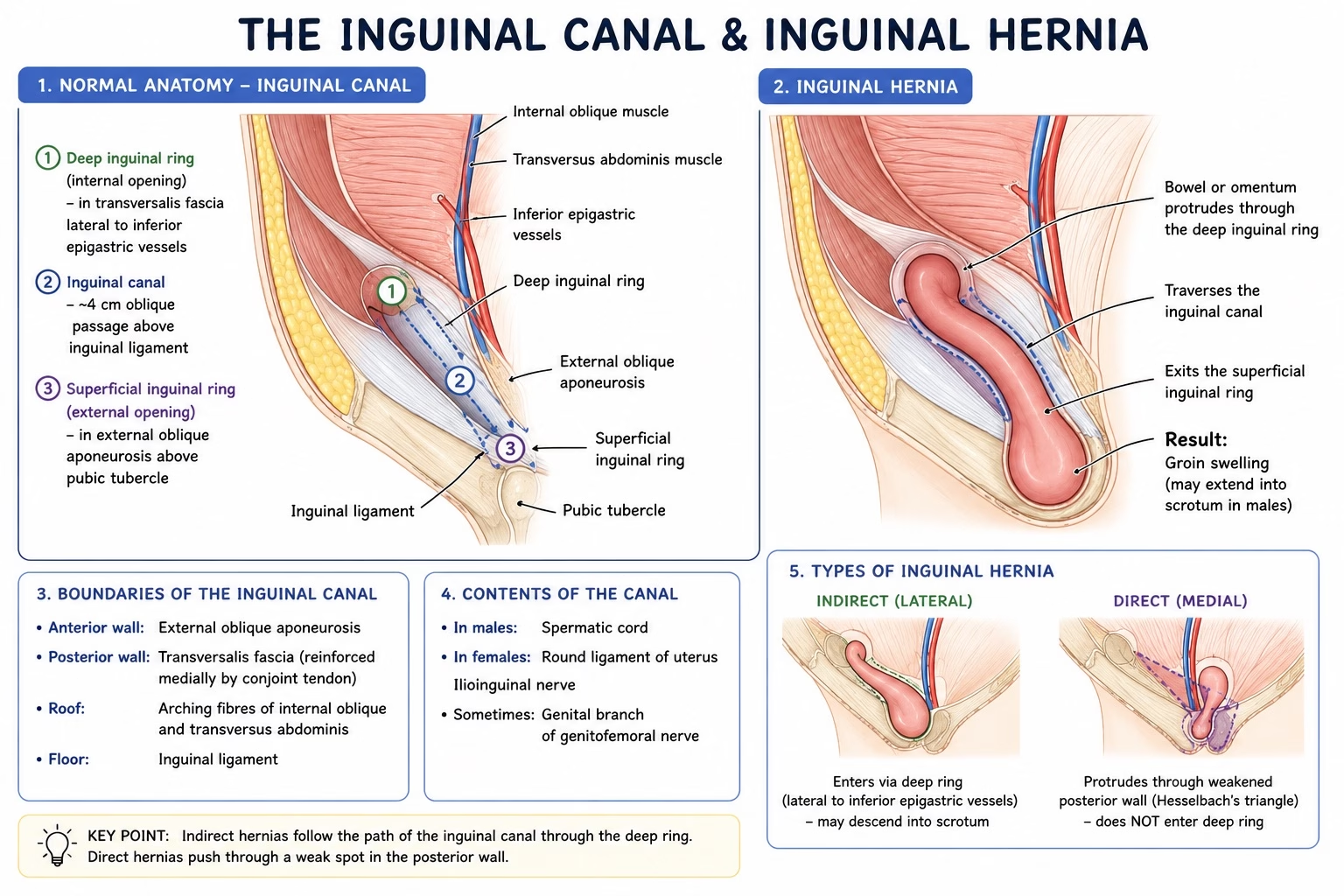
An inguinal hernia occurs when tissue pushes through a weakness in the groin region. It may appear as a bulge above the groin crease or into the scrotum in men. The lump often becomes more obvious when standing, coughing, lifting or straining. It may reduce when lying down. Some people feel dragging, pressure, burning, aching or discomfort at the end of the day.
Inguinal hernias do not usually resolve by themselves in adults. A small, soft, minimally symptomatic hernia can sometimes be observed, but an enlarging or symptomatic hernia deserves assessment. If repair is recommended, Upper Edge Surgery offers inguinal hernia repair in Brisbane.
Femoral hernia is less common but important
A femoral hernia sits lower in the groin, near the upper thigh crease. It is less common than an inguinal hernia but often taken seriously because it can have a higher chance of trapping. Femoral hernias may be subtle and can be harder to diagnose on examination alone, particularly if the lump is intermittent.
If a groin lump is low, tender, difficult to reduce or associated with bowel symptoms, it should not be ignored. A planned assessment can identify whether the lump fits a femoral hernia pattern and whether repair is recommended. This is one of the reasons generic internet advice about “groin hernias” is not enough; the exact location matters.
Swollen lymph nodes can also cause groin lumps
The groin contains lymph nodes that can enlarge due to infection, inflammation, skin wounds, sexually transmitted infections, leg infections or, less commonly, cancer. Lymph nodes often feel like small oval lumps under the skin. They may be tender if reactive or infection-related. Unlike a hernia, they generally do not appear and disappear with coughing or standing.
Persistent, enlarging, hard, fixed or unexplained lymph nodes should be assessed by a GP. The GP may examine the legs, skin, genitals and abdomen, ask about infections and systemic symptoms, and consider blood tests or imaging. Not every groin lump belongs to a surgeon first; a good GP assessment helps direct the pathway.
Cysts, abscesses and skin problems
Cysts, boils, abscesses and ingrown hairs can occur in the groin because the area is warm, mobile and prone to friction. These lumps are often in the skin rather than deep beneath it. They may be red, tender, fluctuant or discharge fluid. Treatment may involve antibiotics, drainage or removal depending on the diagnosis.
A skin-based lump is different from a hernia, but patients may not be able to tell the difference themselves. Avoid squeezing painful lumps in the groin, especially if there is redness spreading, fever or diabetes/immunosuppression. Medical review is safer.
Considering a specialist opinion?
Dr Goutham Sivasuthan offers individualised assessment across Brisbane, Redland, Moreton Bay and Logan.
Make an appointment →Varicose veins and vascular causes
Sometimes a groin lump is related to veins or blood vessels. A saphena varix, for example, can mimic a femoral hernia. Vascular lumps may have a cough impulse or change with standing, which adds to the confusion. Pulsatile lumps, severe pain, leg swelling or vascular symptoms require careful assessment and sometimes vascular imaging.
This is another reason not to book surgery based only on a self-diagnosis. Examination and, where needed, ultrasound can help distinguish a hernia from lymph nodes, cysts and vascular causes.
How doctors work out the cause
The history gives important clues: when the lump appeared, whether it changes with standing or coughing, whether it reduces when lying down, whether it is painful, whether there are bowel symptoms, urinary symptoms, skin infections, fever, weight loss or night sweats. Examination may include checking both groins while standing and coughing.
Ultrasound is commonly used when the diagnosis is uncertain. It is dynamic, meaning the sonographer can ask the patient to cough or strain while scanning. CT may be considered for complex or recurrent hernias, abdominal wall planning or when ultrasound does not answer the question.
When a groin lump is urgent
Urgent warning signs include sudden severe pain, a hard tender lump that will not push back in, redness or warmth over the lump, vomiting, abdominal swelling, inability to pass wind or stool, fever, fainting or feeling very unwell. These symptoms can suggest a trapped hernia or infection and should be assessed in an emergency department.
If the lump is painless, soft and intermittent, outpatient review may be reasonable. But “I can still push it back” should not become a reason to ignore progressive symptoms for years. A planned consultation gives you a safer decision-making window.
What happens if it is a hernia
If the lump is an inguinal or femoral hernia, the surgeon will discuss monitoring versus repair, the likely technique, whether mesh is recommended, expected recovery and timing around work or activity. Upper Edge Surgery offers assessment for hernia surgery in Brisbane, including groin hernias and abdominal wall hernias.
The aim is to match the operation to the person and the hernia, not to apply a one-size-fits-all approach. Factors include side, size, previous repairs, previous prostate or pelvic surgery, pain pattern, activity level, medical conditions and patient preference.
When to seek urgent medical attention
Do not wait for an outpatient appointment if you have severe or rapidly worsening pain, persistent vomiting, fainting, a hard tender lump that will not reduce, fever, jaundice, black stools, large-volume bleeding, chest pain, shortness of breath, or symptoms that feel unsafe to you. In those situations, attend the closest emergency department or call emergency services.
Brisbane patient pathway
For non-urgent symptoms, the usual pathway is to see your GP first, arrange appropriate blood tests or imaging if needed, then obtain a referral for specialist assessment. At Upper Edge Surgery, Dr Goutham Sivasuthan reviews the history, examines the relevant area where appropriate, explains likely causes in plain language, and outlines the options. Patients can make an appointment online or call the rooms if they already have a referral.
If you have a groin lump, book a GP review. If a hernia is suspected, a referral for hernia assessment can clarify whether monitoring or repair is appropriate.
Preparing for your appointment
Before your appointment, notice whether the lump is present when standing, coughing or straining, and whether it disappears when lying down. Do not repeatedly force it back in if it is painful. If the lump is intermittent, consider taking a non-identifying photo for your doctor when it is visible, because some hernias reduce before the appointment and are harder to demonstrate. Bring previous ultrasound, CT or operative reports if you have had hernia repair, prostate surgery, pelvic surgery or abdominal surgery before.
Also write down what the lump stops you from doing. Does it affect gym training, coughing, gardening, work lifting, sex, walking, sleep or travel confidence? Those details matter because hernia decisions are not based only on size. A small hernia that causes daily limitation may deserve treatment sooner than a larger hernia that is soft, reducible and not affecting life. The consultation should connect the anatomy to your real-world goals.
Frequently asked questions
How do I know if a groin lump is a hernia?
A hernia often appears or enlarges with standing, coughing, lifting or straining and may reduce when lying down. Examination and ultrasound can help confirm it.
Can a swollen lymph node feel like a hernia?
Yes, patients can confuse them. Lymph nodes usually do not reduce when lying down and may relate to infection or inflammation.
When is a groin lump urgent?
A painful hard lump that will not reduce, vomiting, fever, redness, abdominal swelling or inability to pass wind or stool needs urgent assessment.
Do all groin lumps need surgery?
No. The treatment depends on the cause. Hernias often need surgical discussion, while lymph nodes, cysts or infections follow different pathways.
Related reading
See Dr Goutham Sivasuthan, Specialist Surgeon
Clear, unhurried advice about your options — no pressure to proceed.
Make an appointment →Call (07) 3333 5518This article is general information for patients in Brisbane, Redland, Moreton Bay and Logan. It does not replace advice from your GP, surgeon or emergency department. If symptoms are severe, sudden or worsening, seek urgent medical care rather than waiting for a routine appointment.