
Gallstones: symptoms, tests and treatment in Brisbane
Gallstones are hard deposits that form in the gallbladder. Many cause no symptoms and need no treatment. Stones that cause pain or complications are usually treated by removing the gallbladder.

In short
- Typical gallstone pain sits under the right ribs or just below the breastbone, often after a fatty meal.
- An ultrasound is usually the first test.
- Fever, yellow skin or eyes, or severe pain that does not settle needs urgent care.
- Dr Goutham Sivasuthan, Specialist Surgeon, sees patients with gallstones in Brisbane and surrounds.
When gallstone pain needs urgent care
Go to your nearest emergency department if upper abdominal pain comes with any of these:
- fever or chills
- yellowing of the skin or eyes, dark urine or pale stools
- severe pain that has lasted more than a few hours
- vomiting that will not stop
These can be signs of an inflamed gallbladder, a blocked bile duct or pancreatitis. Do not wait for a routine appointment.
Chest pain is not always from the gallbladder. Call triple zero (000) if chest pain is severe, is getting worse, or comes with breathlessness, sweating or pain spreading to the arm or jaw.
Gallstones with pain, and gallstones without
Pain under the right ribs an hour or so after a rich meal. It builds, holds for a while, then eases. Sometimes it reaches the back or the right shoulder blade. Doctors call this biliary colic, and gallstones are the usual cause.
Other people have no pain at all. Their gallstones turn up on a scan done for something else.
Both groups ask the same thing: does this need treatment? This page explains what gallstones are, how they are confirmed and how that decision is made.
What are gallstones?
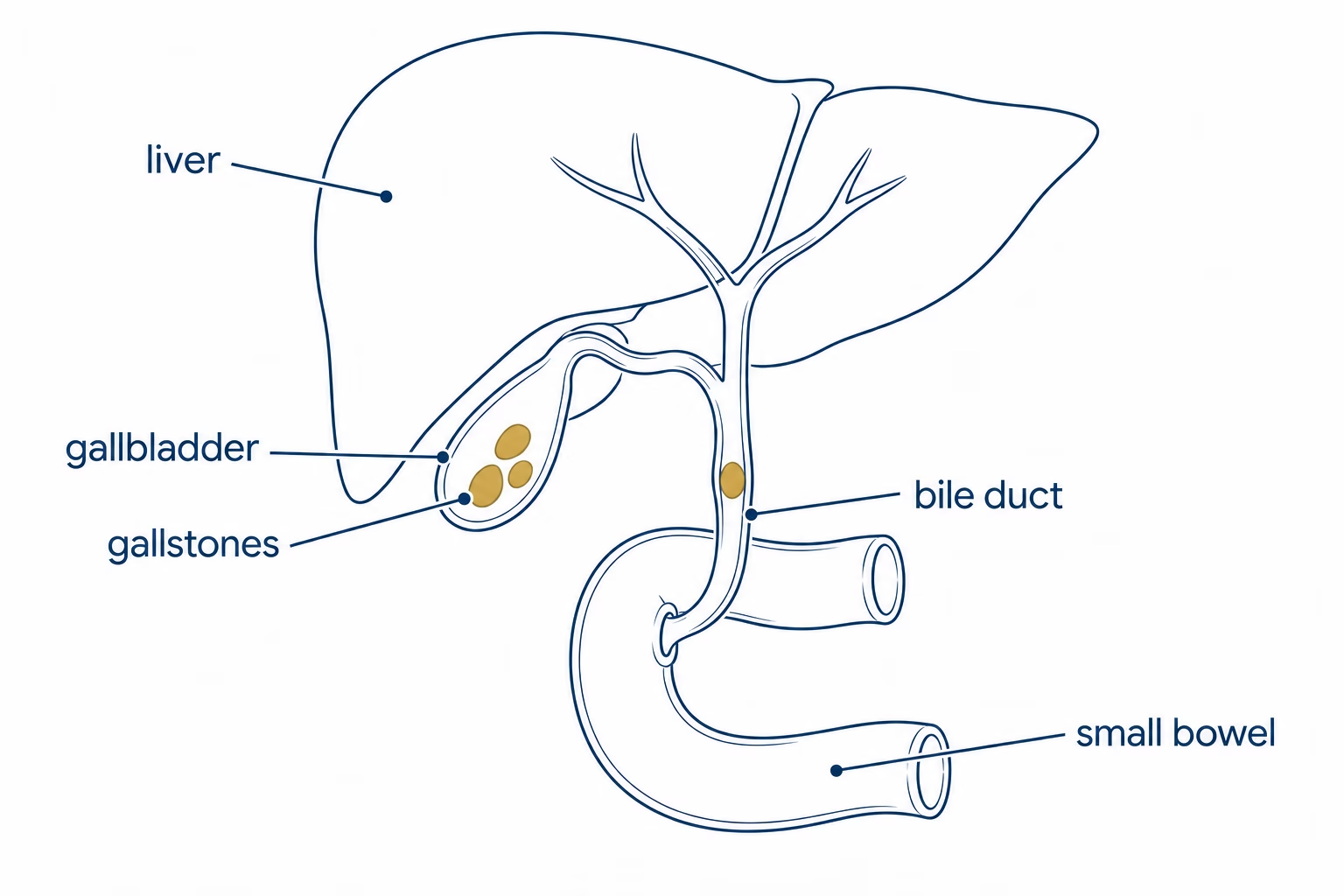
The gallbladder is a small, pear-shaped organ under the liver. It stores bile, a fluid made by the liver that helps digest fat.
Gallstones form when the substances in bile fall out of balance and harden. Most are made mainly of cholesterol. Others are made of bilirubin, a pigment from broken-down red blood cells. A stone can be as small as a grain of sand or several centimetres across, and you can have one or many.
Gallstones are more common in women. Pregnancy, the contraceptive pill, obesity, rapid weight loss and diabetes also raise the risk.
Do all gallstones cause symptoms?
No. Many gallstones never cause trouble. These are often called silent gallstones.
Silent gallstones are usually found by chance. They generally do not need an operation, because the chance of them causing problems is low and surgery carries its own risks. Your GP may simply keep watch.
What gallstone pain feels like
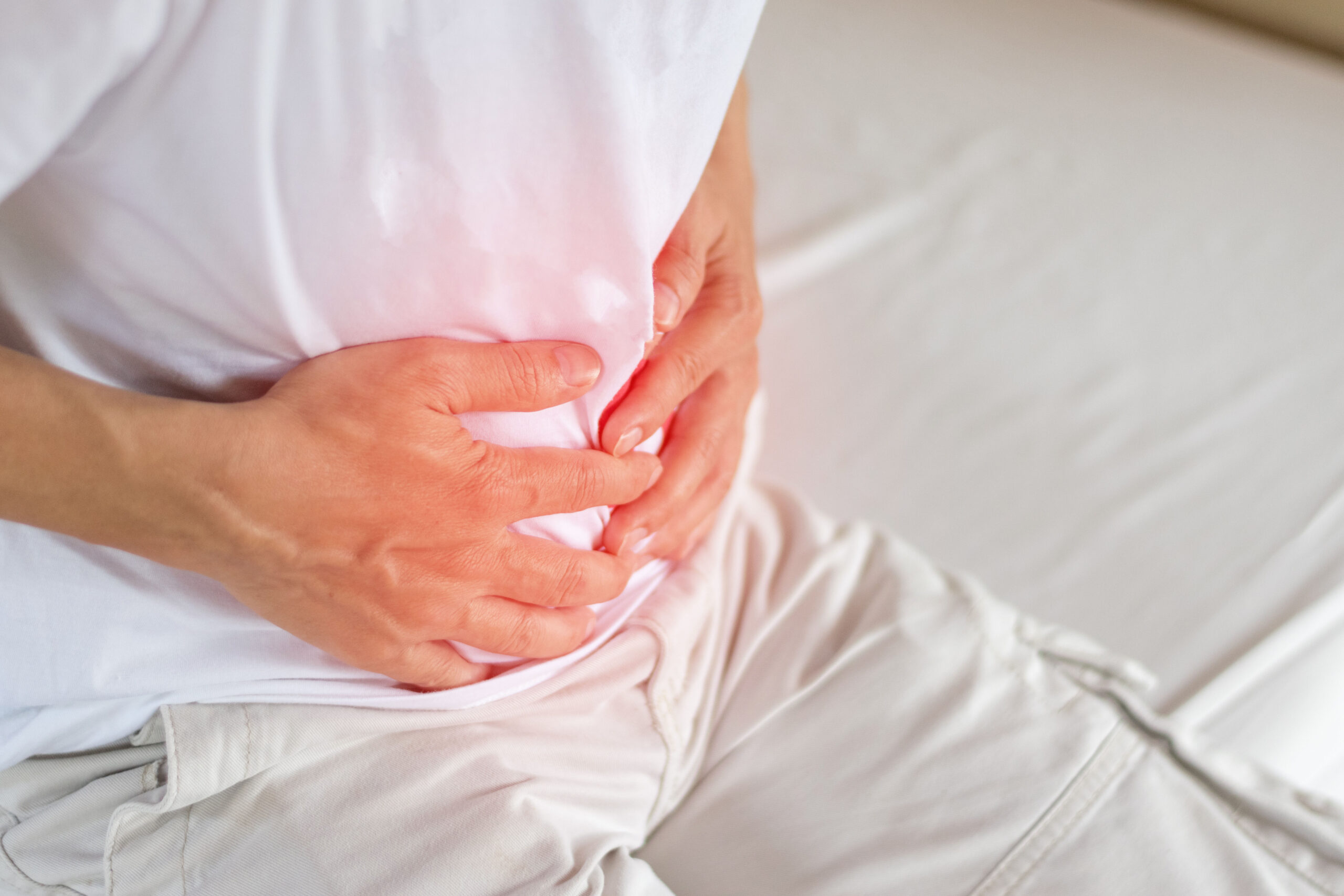
Biliary colic is a steady, gripping pain in the upper right of the abdomen or just below the breastbone. It often starts after a fatty meal, commonly in the evening. It usually lasts from half an hour to a few hours and then settles.
Nausea and vomiting can come with it. The pain can spread to the back or the right shoulder blade, which is why gallstones are sometimes mistaken for a back problem. Read more in Can gallstones cause back pain?
Symptoms alone cannot confirm gallstones. Reflux, stomach ulcers and other conditions can feel similar, so the pattern has to be matched with a scan.
How are gallstones diagnosed?
An ultrasound is usually the first test. It is done through the skin, uses no radiation and shows most stones in the gallbladder.
Blood tests look for signs of inflammation, infection or a blocked bile duct. If a stone in the bile duct is suspected, an MRI scan of the ducts, called an MRCP, may be arranged.
Sometimes the pain is typical but no stones are seen. A HIDA scan can then measure how well the gallbladder empties. That situation is covered on the biliary dyskinesia page.
When do gallstones need treatment?
It depends on whether the stones are causing symptoms or complications.
Stones found by chance, with no symptoms. Treatment is not usually needed.
Stones causing biliary colic. Removing the gallbladder is usually discussed, because attacks tend to return once they have started.
Stones causing a complication. An inflamed gallbladder, pancreatitis or a blocked bile duct needs prompt medical care. Removing the gallbladder is usually recommended afterwards.
A stone that has moved into the bile duct is a separate problem. It may need an endoscopic procedure called an ERCP, which removes the stone through a flexible tube passed through the mouth.
How the gallbladder is removed
The operation is a laparoscopic (keyhole) cholecystectomy. The whole gallbladder is removed, not only the stones, because a gallbladder that has formed stones can form more. Most people live normally without one, as the liver keeps making bile.
Dr Goutham performs this operation at St Andrew's War Memorial Hospital, Sunnybank Private and Mater Private Redland. The operation, its risks and the recovery are explained on the gallbladder surgery in Brisbane page and in the guide to recovery after gallbladder surgery.
Can diet or medicines treat gallstones?
Diet can ease symptoms. It does not dissolve stones. Smaller, lower-fat meals may reduce attacks while you wait for an assessment. A "gallbladder cleanse" is not a treatment.
Medicines such as ursodeoxycholic acid can dissolve some cholesterol stones. They work slowly and do not suit most people, and stones can return once the medicine stops. For these reasons they are not usually recommended.
What to bring to a gallstone consultation
- your GP referral
- the ultrasound report and any blood test results
- a list of your medicines and previous operations
- notes on your attacks: when they happen, how long they last and what sets them off
Questions worth asking:
- Are my symptoms likely to be coming from the gallstones?
- What happens if I wait?
- Would keyhole surgery suit me, and what are the risks in my case?
- How long would I need off work and driving?
Seeing Dr Goutham about gallstones
Dr Goutham Sivasuthan is a Specialist Endoscopic and Minimally Invasive Surgeon who consults across Brisbane, Redland, Moreton Bay and Logan.
Ask your GP for a referral, then call the rooms on (07) 3333 5518 or request a consultation online. A referral lets Medicare rebate part of the consultation fee. The rooms give you a written, itemised quote before any procedure is booked.
Gallstone questions
Do all gallstones need surgery?
No. Gallstones that cause no symptoms usually need no treatment. Surgery is discussed when stones cause pain or a complication.
Can the stones be removed and the gallbladder left in place?
Not usually. The standard operation removes the whole gallbladder, because a gallbladder that has formed stones can form more.
Can gallstones cause back pain?
Yes. Gallstone pain can spread to the back or the right shoulder blade. Back pain has many other causes, so the pattern and a scan are both needed to tell.
What should I eat if I have gallstones?
No diet removes gallstones. If fatty meals bring on pain, smaller and lower-fat meals may help until you are assessed.
Is it safe to wait if my gallstones cause no symptoms?
Usually, yes. Silent gallstones are generally watched rather than treated. See your GP if symptoms start, and use the urgent-care list at the top of this page.
Continue your research
Trusted information
This page is general information. It does not replace advice from your own doctor.