

Inguinal Hernia Repair in Brisbane: Cost, Recovery and When Surgery Is Needed
- An inguinal (groin) hernia is a gap in the abdominal wall through which tissue pushes — it does not heal on its own.
- Small, painless hernias can sometimes be watched; most that cause symptoms are best repaired.
- Repair is done open or laparoscopically (keyhole); both are effective and the right choice is individual.
- Most people return to light activity within 1–2 weeks, with full recovery over several weeks.
A groin hernia is one of the most common reasons people see a general surgeon. The good news is that repair is reliable and well understood. This guide covers when surgery is genuinely needed, the options, recovery, and how costs work in Brisbane.
Important: Dr Goutham repairs primary anterior abdominal-wall hernias — inguinal (groin), femoral, umbilical, epigastric, incisional and ventral. He assesses hiatus hernias but does not perform hiatal (paraoesophageal) or parastomal hernia repair; where surgery is indicated, he coordinates onward care with an upper-GI specialist.
What an inguinal hernia is — and why it won’t heal itself
An inguinal hernia occurs when tissue, usually part of the bowel or fat, pushes through a weak point in the muscle of the groin. You may notice a bulge that comes and goes, an ache, or a dragging sensation, often worse with lifting, coughing or standing for long periods. Because it is a structural gap in the muscle wall, it cannot mend on its own — only surgery closes it.
Does every hernia need surgery?
Not always. A small, soft, painless hernia in someone with low risk can sometimes be safely monitored (“watchful waiting”). Surgery is recommended when a hernia is painful, enlarging, affecting daily life, or showing any sign of complication.
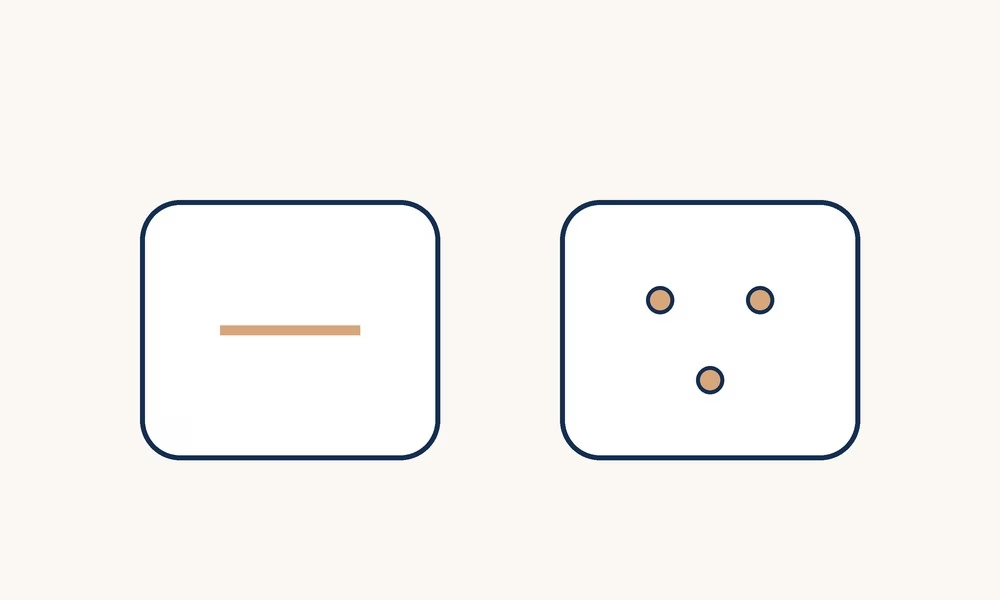
Open vs keyhole repair
| Open repair | Keyhole (laparoscopic) | |
|---|---|---|
| How | One incision over the groin, mesh reinforcement | Several small incisions, mesh placed internally |
| Often suited to | Larger or single-sided hernias; some medical situations | Both-sided or recurrent hernias; faster return to activity for some |
| Recovery | A few weeks | Often slightly quicker early recovery |
Both techniques usually use a mesh to reinforce the repair and both have excellent, durable results. The best choice depends on your hernia, your body and your circumstances — something to decide together at consultation.
Recovery timeline
- First few days — rest, simple pain relief, gentle movement; keep the wound clean.
- 1–2 weeks — most people are back to desk work and light daily activity.
- 4–6 weeks — gradual return to heavier lifting, exercise and manual work.
Driving can usually resume once you can perform an emergency stop without pain. Your exact timeline depends on the repair and your job.
What it costs in Brisbane
Hernia repair is typically performed as day surgery. For insured patients we aim for a transparent known gap — a small, capped out-of-pocket — and we explain every component (surgeon, anaesthetist and hospital fees) in writing before you commit. Each case is unique: the size, location, side, complexity and chosen approach all influence the final cost, so we provide an individual, written quote at your consultation rather than a blanket figure.

Frequently asked questions
How urgent is hernia surgery?
Most inguinal hernia repairs are planned, not urgent, and a small painless hernia can sometimes be monitored. It becomes an emergency only if the hernia becomes firm, very painful or stuck out, which can mean the bowel is trapped — seek care immediately if that happens.
How long is recovery after hernia surgery?
Most people return to light activity and desk work within one to two weeks, with heavier lifting and exercise resuming over four to six weeks. Keyhole repair can give a slightly quicker early recovery for some patients.
Is keyhole hernia repair better than open?
Neither is universally better. Keyhole can suit both-sided or recurrent hernias and may speed early recovery, while open repair is well suited to larger or single-sided hernias. The right choice is individual and decided at consultation.
Will an inguinal hernia go away on its own?
No. A hernia is a physical gap in the muscle wall and cannot heal by itself. It can be monitored if small and symptom-free, but only surgery actually repairs it.
Have a groin lump or ache?
Dr Goutham Sivasuthan will assess your hernia and talk you through whether repair is needed, which approach suits you, and the likely cost — with no pressure to proceed.
Book a hernia assessmentGeneral information, not personal medical advice. Last medically reviewed by Dr Goutham Sivasuthan, specialist surgeon, June 2026. AHPRA MED0002000354.