
Femoral Hernia Surgery in Brisbane
What is a femoral hernia? A femoral hernia is a small bulge low in the groin, where the thigh meets the lower tummy. It happens when tissue pushes through a weak point near the big blood vessels of the leg. Femoral hernias are more common in women, and because they can become trapped, they usually need surgery.
- suddenly becomes painful, firm, or won't push back in
- turns red or purple
- comes with nausea, vomiting or fever
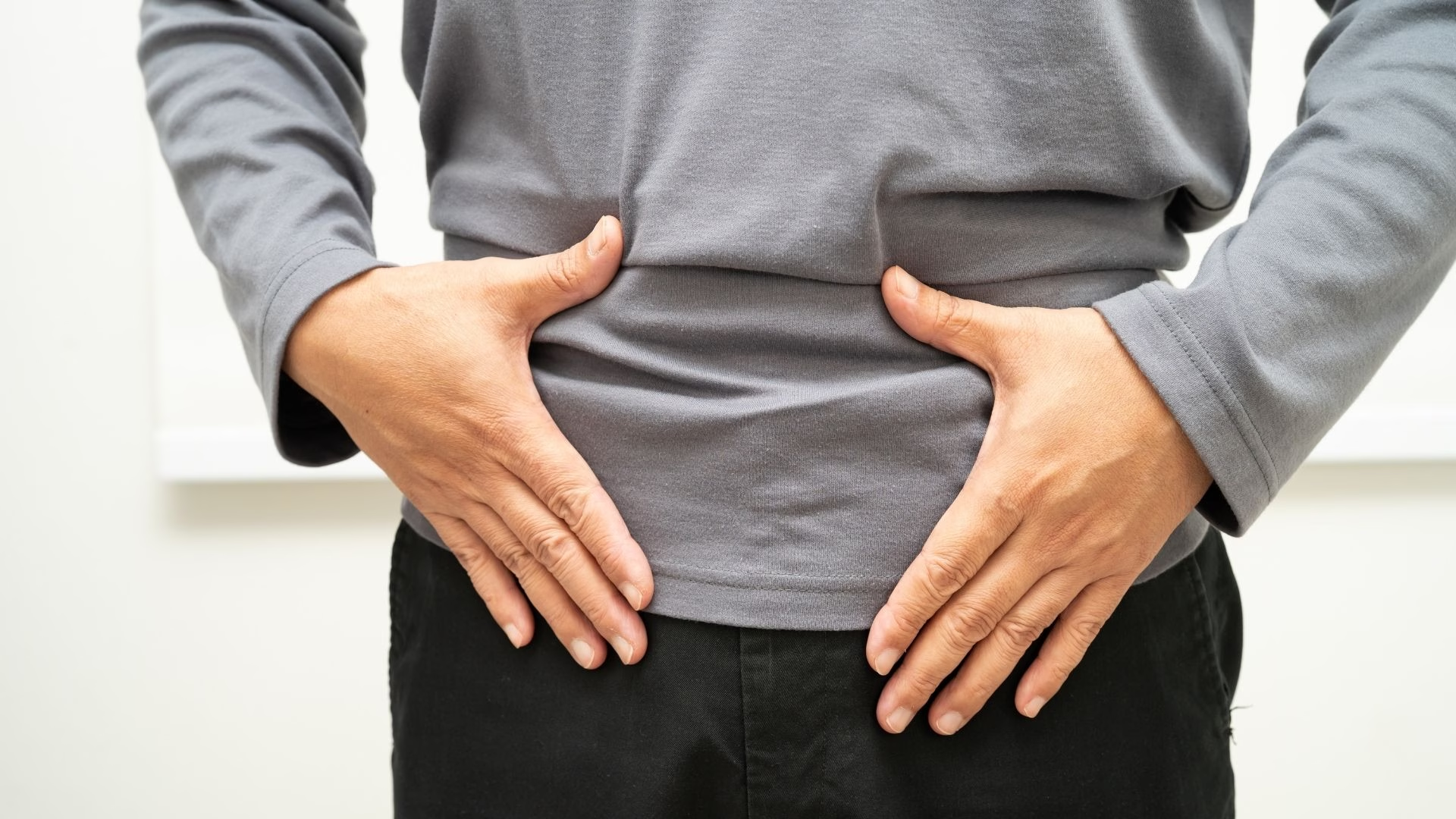
Symptoms of a femoral hernia
- A small lump or bulge low in the groin or upper inner thigh
- Aching or discomfort, often worse with standing, lifting or coughing
- A lump that may flatten when you lie down, early on
- Sometimes no symptoms at all — found during a check for something else
Femoral hernia or inguinal hernia?
Both are groin hernias, so they are easy to confuse. An inguinal hernia sits a little higher and is far more common. A femoral hernia sits lower, just below the groin crease, and is more common in women. The lump can be small, so femoral hernias are easy to miss — if you have a new groin lump, it is worth having it checked.
How a femoral hernia is diagnosed
Dr Goutham can often diagnose a femoral hernia from a simple examination. If the lump is small or hard to feel, an ultrasound (and occasionally a CT scan) confirms it and rules out other causes.
Who gets a femoral hernia?
Femoral hernias are more common in women, in older adults, and after pregnancy. Anything that raises pressure inside the tummy — heavy lifting, a long-term cough, straining or constipation — can contribute. They can also appear after a previous groin hernia repair.
How a femoral hernia is repaired
The weak point is closed and reinforced, usually with a soft mesh patch that strengthens the repair and lowers the chance the hernia comes back. Dr Goutham talks through the approach that suits you:
Keyhole (laparoscopic) repair
Keyhole surgery (also called laparoscopic) uses a few small cuts, a camera and fine instruments to place the mesh from inside. It often means less discomfort and a quicker return to normal activity, and lets the surgeon check the other side at the same time.
Open repair
A single small cut over the hernia is used to push the tissue back and reinforce the area with mesh. Open repair can be the better choice in some situations, including emergency surgery.
Robotic-assisted repair
For selected groin and abdominal-wall hernias, Dr Goutham also offers robotic-assisted repair — keyhole surgery where the instruments are guided by a robotic system the surgeon controls, giving a magnified 3D view and very precise movement.
Pre-operative optimisation
Good preparation can reduce avoidable risk and support a smoother recovery. Your plan is personalised and may include:
Smoking
Stopping smoking before surgery — ideally for at least four weeks where possible — supports wound healing and lung function.
Diabetes & nutrition
Diabetes control, including an individual HbA1c target where relevant, and adequate nutrition are reviewed before surgery.
Weight & conditioning
When appropriate, gradual weight optimisation and maintaining safe activity can lower strain on the repair and improve recovery.
Medicines & breathing
Blood thinners, other medicines, cough and breathing conditions are reviewed. Never stop anticoagulants unless your treating team gives you a clear plan.
Recovery after femoral hernia surgery
Everyone heals at their own pace. As a general guide:
- First few days: rest, simple pain relief, short gentle walks
- 1–2 weeks: most people return to desk work and light activity
- 4–6 weeks: heavy lifting and strenuous exercise are gradually resumed
You receive written instructions and a review appointment. See what to expect after hernia surgery.
Risks of femoral hernia repair
Femoral hernia repair is generally safe. Possible risks include bruising and swelling, fluid collection (seroma), infection, temporary or (rarely) longer-lasting nerve discomfort near the groin, and uncommon recurrence. Because a femoral hernia carries a higher chance of becoming trapped than some other groin hernias, Dr Goutham will also discuss the signs to watch for beforehand and what urgent care looks like if they occur. Serious complications are rare. Dr Goutham will discuss the risks relevant to your specific repair.
Femoral hernia repair cost
A first-time femoral hernia repair is included in Dr Goutham's known-gap arrangement for eligible insured patients — a capped surgeon's fee confirmed in writing after your consultation. The hernia surgery cost guide covers eligibility, what the hospital and anaesthetist bill separately, and a 60-second checker.
Why choose Dr Goutham Sivasuthan
Dr Goutham Sivasuthan is a general and endoscopic surgeon, Australian-trained through the Royal Australasian College of Surgeons, and GESA-accredited (UQ MBBS; AHPRA MED0002000354) with a focus on minimally invasive (keyhole and robotic) hernia surgery. He operates at trusted Brisbane hospitals including St Andrew's War Memorial, Mater Private Redland and Sunnybank Private.
Dr Goutham assesses hiatus hernias but does not perform hiatal (paraoesophageal) or parastomal hernia repair. When surgery is indicated, he coordinates onward care with an upper-GI specialist.
Tailored femoral hernia care
- ✓Prompt assessment — because a femoral hernia carries a higher chance of becoming trapped than some other hernias, timely review matters.
- ✓Approach matched to you — keyhole, open or robotic-assisted repair after full assessment.
- ✓Mesh-reinforced, durable repair.
- ✓Care close to home — across Brisbane, Redland, Moreton Bay and Logan.
- ✓Direct surgeon access — before and after surgery.
Frequently asked questions
Are femoral hernias more common in women?
Yes. Femoral hernias are several times more common in women than men, partly because of the shape of the female pelvis.
Do femoral hernias always need surgery?
Most do. Because the gap they push through is narrow, there is a higher chance of the bowel becoming trapped, so repair is usually recommended even for a small hernia.
Is femoral hernia surgery day surgery?
Usually yes — most planned repairs are done as day surgery under general anaesthetic, so you go home the same day.
How soon can I drive and return to work?
Most people return to desk work within 1–2 weeks and resume heavier activity by 4–6 weeks. Do not drive while you still have pain that could limit an emergency stop.
Is mesh safe?
Modern soft meshes are well studied and lower the chance of the hernia coming back. Dr Goutham explains the mesh used and answers any concerns at your consultation.
Trusted resources
Independent patient information from Australian health organisations.
Discuss your femoral hernia with Dr Goutham
If you have a new lump low in the groin, or have been told you have a femoral hernia, speak with your GP about a referral or contact Upper Edge Surgery. After consultation, the rooms can explain the recommended pathway and provide a written quote. All costs are confirmed in writing before any procedure.